
Best Practices for Fluid Bed Dryer Operation, Maintenance, and Troubleshooting
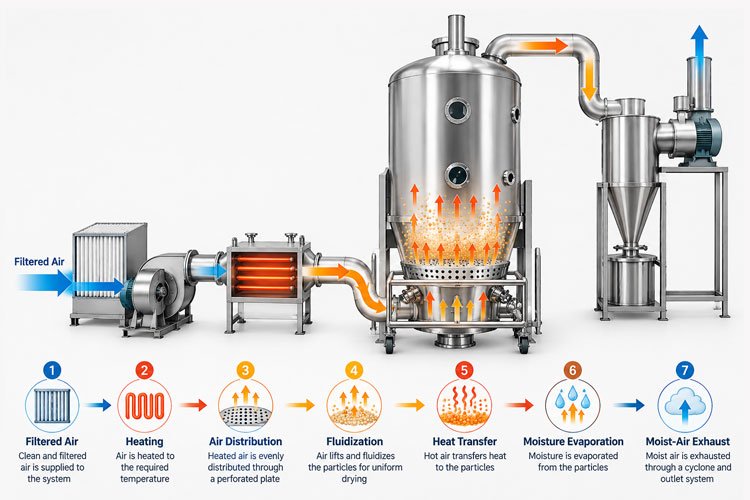
Industrial drying equipment performs most effectively when operating procedures, maintenance activities, and process monitoring work together. A fluid bed dryer depends on the coordinated movement of air, transfer of heat, suspension of particles, and removal of moisture. Problems in any of these areas can affect drying performance, product quality, and production continuity. Establishing practical operating and maintenance procedures helps manufacturers identify developing issues before they become more disruptive.
Fluid bed dryers are used in a range of industries, but operating conditions differ according to the product, equipment design, and process objective. The JSK Engitech fluid bed dryer guide offers an introduction to the technology. For day-to-day operation, manufacturers should follow the specific equipment documentation, approved procedures, and safety requirements applicable to their installation.
Prepare the Equipment Before Starting a Batch
Preparation begins with confirming that the dryer is suitable for the product and that the required operating conditions have been established. Operators should verify the product identification, planned batch quantity, approved process settings, and availability of the necessary utilities. Equipment status should also be checked before loading material.
Pre-operation checks should follow a written procedure appropriate to the system. The purpose is to confirm that the machine is ready to operate and that any issue identified during inspection is addressed before the process begins.
Key Pre-Start Checks
- Confirm that the equipment is clean and released for the intended product.
- Check the product container, air distribution plate, seals, and accessible components.
- Verify that the filters are installed correctly and are in an acceptable condition.
- Confirm that temperature and airflow instruments are functioning as required.
- Review the batch quantity and approved process instructions.
- Check that guards, interlocks, and other required safety systems are in place.
- Ensure that exhaust arrangements and required utilities are available.
The precise inspection requirements depend on the dryer configuration. Operators should not bypass protective systems or improvise maintenance while the equipment is running. Defects should be reported and addressed through the approved maintenance process.
Establish Stable Drying Conditions
Once the equipment is prepared and the product is loaded according to the approved procedure, the drying cycle can proceed under the specified operating conditions. Temperature, airflow, loading, and drying duration should remain within the established process limits unless an authorised adjustment is required.
Stable operation depends on understanding how these variables interact. Increasing air temperature may increase the available heat, but it may also affect a heat-sensitive product. Increasing airflow can improve fluidization under some conditions, but excessive airflow may carry more product into the exhaust or increase energy demand.
Monitor More Than One Parameter
Temperature readings alone may not explain why a batch is drying differently. Changes in airflow, filter condition, feed moisture, or particle behaviour can also affect the process. Operators should review the relevant process measurements together and compare them with the approved operating range.
When a deviation occurs, record the observation and follow the site's response procedure. Avoid changing several parameters simultaneously without a clear technical basis, because doing so can make it difficult to determine which change affected the outcome.
Common Operating Problems and Their Possible Causes
Fluid bed dryer problems can originate in the incoming material, the equipment, the operating conditions, or the supporting air system. Identifying the underlying cause is more useful than treating every symptom as an airflow or temperature issue.
Uneven Drying
Uneven moisture removal may be associated with inconsistent incoming material, poor air distribution, excessive bed depth, unsuitable airflow, or product agglomeration. The appropriate investigation depends on the specific equipment and the pattern of the observed variation.
Review batch loading, material properties, airflow records, temperature trends, and the moisture-testing method. If the problem persists, qualified technical personnel may need to inspect the air distribution system or conduct additional process testing.
Excessive Product Carryover
Fine particles may enter the exhaust when their size, density, or aerodynamic behaviour makes them susceptible to entrainment. Airflow that is too high for the material can increase the problem, while an unsuitable or damaged filter may affect product retention.
Follow the equipment manufacturer's instructions when checking airflow and filtration. Do not open or clean pressurised components without following the required isolation and safety procedures. The cause should be established before operating settings are changed.
Agglomeration or Poor Fluidization
Some materials form clusters when surface moisture, temperature, or particle interactions encourage sticking. Cohesive powders may also resist uniform fluidization. These behaviours can create areas where air movement and moisture removal differ from the intended process.
Review the material's characteristics, incoming moisture, preparation conditions, loading quantity, and established operating parameters. Changes to the drying procedure should be supported by technical assessment and appropriate approval.
Longer-Than-Expected Drying Cycles
Longer cycles may result from increased incoming moisture, changes in particle properties, reduced airflow, filter loading, heating-system performance, or an unsuitable endpoint method. Extending every cycle without investigation may increase operating costs while leaving the original cause unresolved.
Compare the affected batch with previous process records, where available, and identify which variables changed. Inspect relevant components according to the approved maintenance procedure and verify the endpoint using the established method.
Preventive Maintenance for Reliable Operation
Preventive maintenance helps keep the air handling, heating, filtration, control, and mechanical systems in an appropriate operating condition. The maintenance schedule should reflect the equipment manufacturer's recommendations, the operating environment, the material being processed, and the site's maintenance programme.
Regular inspections may cover filter condition, seals, gaskets, moving parts, instrumentation, air distribution components, and accessible product-contact surfaces. The exact list should be developed for the installed machine rather than copied from a generic checklist.
- Inspect and maintain filters according to the specified procedure.
- Check seals and gaskets for wear or damage.
- Verify relevant instruments according to the calibration schedule.
- Inspect air distribution components for blockage, wear, or damage.
- Maintain fans, motors, and heating components according to manufacturer guidance.
- Record maintenance findings, replacement parts, and corrective actions.
Maintenance records help identify recurring faults and support decisions about component replacement or process improvement. They also make it easier to understand whether performance changes coincide with a particular maintenance event.
Cleaning and Product Changeover
Cleaning is an important part of maintaining product quality, especially in facilities that handle multiple materials. Residue can accumulate in product containers, filters, seals, and other areas depending on the equipment design and the properties of the material.
Cleaning procedures should specify the appropriate method, required tools, inspection points, and acceptance criteria. In regulated manufacturing, documentation and release requirements may also apply. Components should be reassembled correctly after cleaning, and the equipment should be inspected before returning to service.
Safety Considerations During Operation
Industrial dryers involve heated surfaces, moving air, electrical components, and potentially airborne dust. Some products may also introduce chemical exposure or combustible-dust hazards. Safety controls should therefore be based on a documented assessment of the specific product, installation, and operating environment.
Operators should receive suitable training, use required protective equipment, follow approved operating limits, and report unusual noise, overheating, abnormal pressure conditions, or other signs of malfunction. Maintenance should be performed only after the equipment has been placed in a safe condition using the appropriate isolation procedures.
Use Process Records to Improve Performance
Useful records include batch loading, initial and final moisture, temperature trends, relevant airflow readings, cycle duration, maintenance events, and any deviations. Comparing these records can help distinguish a one-time variation from a recurring operational issue.
Where a process change is proposed, document the reason and assess its effect on drying performance and product quality. Changes to validated or otherwise controlled processes should follow the relevant approval and verification requirements.
Conclusion
Reliable fluid bed dryer operation depends on consistent preparation, controlled operating conditions, preventive maintenance, appropriate cleaning, and systematic troubleshooting. Monitoring several process variables together helps operators investigate problems more effectively and avoid unnecessary adjustments.
By following equipment-specific instructions Fluid Bed Dryer and maintaining accurate records, manufacturers can Fluid Bed Dryer support safer operation and more consistent drying results. The JSK Engitech fluid bed dryer guide can help readers understand the technology, while the installed machine's documentation and site procedures should govern actual operation and maintenance.
Comments on “A Practical Guide to Fluid Bed Dryer Operation, Maintenance, and Troubleshooting”